

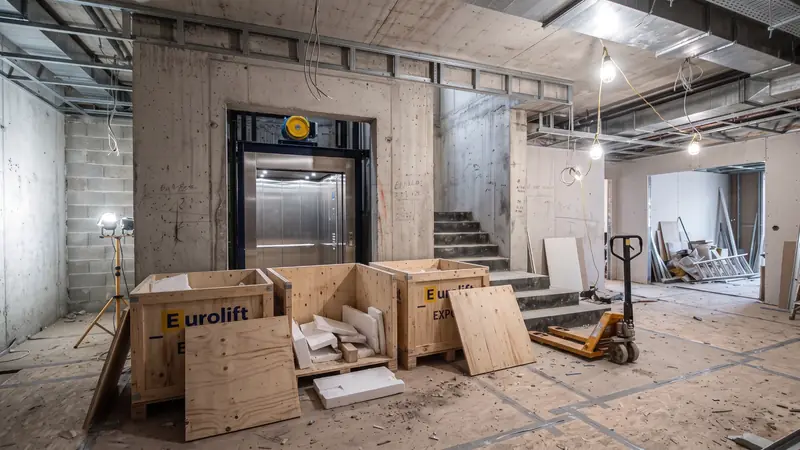
Car door opening · cl. 5.3.15.2
Outside the unlocking zone, the car door must not open more than 50 mm under a 1,000 N force: mechanical door lock or opening restrictor.
EN 81-20 sets the construction and installation rules for passenger and goods passenger lifts. EN 81-50 defines how safety components are designed, calculated, checked and tested. They apply under European directive 2014/33/EU and protect two groups: users and the technicians who maintain the lift.
Outside the unlocking zone, the car door must not open more than 50 mm under a 1,000 N force: mechanical door lock or opening restrictor.
If presence detection fails, the door closes at reduced speed with an audible signal, or the lift is taken out of service.
Car materials rated at least Cfl-s2 for the floor, C-s2,d1 for the walls and C-s2,d0 for the ceiling.
Under 1,000 N, no permanent deformation above 1 mm; laminated glass walls pass hard and soft pendulum tests.
Panel connections at 1,000 N, limited deformation under 300 N and 1,000 N, and a mechanical means keeps the panels in their guides on impact.
At least 100 lux 1 m above the floor in normal service, and 5 lux for 1 hour in emergency lighting.
When an emergency trap door is fitted in the car roof, its clear opening is at least 0.40 × 0.50 m.
Each machine brake must be checkable; with the QI Touch controller, each brake is tested individually from the landing cabinet.
Upward overspeed protection may act on the traction sheave shaft under conditions; Sodimas machines hold a conformity certificate.
Under 1,000 N, no permanent deformation above 1 mm and no elastic deformation above 15 mm.
At the top of the shaft and in the pit: standing 2.00 × 0.40 × 0.50 m, crouching 1.00 × 0.50 × 0.70 m; in the pit, lying 0.50 × 0.70 × 1.00 m.
0.70 m high if the gap to the shaft wall is between 0.30 and 0.50 m, and 1.10 m beyond 0.50 m; resistance to 1,000 N.
Inspection control reachable from the refuge space, non-slip surface, roof withstanding 2,000 N on 0.30 × 0.30 m.
Standard rope terminations, rope retainers on sheaves and mechanical stopping of the car if it moves unexpectedly during maintenance.
Residual current protection on the safety chain and door operators, 0.30 m/s maximum in inspection near the shaft ends, 200 lux at the controller.
5 lux for 1 hour near the emergency control; with QI Touch, lighting of the whole shaft is backed up in a power cut.
Inspection box with lighting, controls and power socket; fixed or retractable ladder for pits under 2.50 m.
Each component shows the manufacturer, the certificate number and the type of device.
Number of people allowed on the roof, permitted postures and work instructions displayed.
Rated load and rules for handling equipment displayed at every landing.
Dedicated switch in the controller, audible and visual signal under the car and an electrical check preventing normal service with bypassed contacts.
To replace a lift in an existing shaft, EN 81-21 allows, under conditions, reduced pits and headroom with additional safety devices. This is how the Médium range can work with a 300 mm pit in existing buildings, against 1,000 mm in new builds.
The lift controller designed and made in France by Sodimas. It drives the machine, doors, signalling and every safety device, and is the standard controller of the Residential Pack and our lifts.
Learn more →The contactor-free controller from Spanish manufacturer Edel, compliant with EN 81-20 and EN 81-50, supplied with its pre-assembled Plug & Play wiring and remotely managed with EDELCONNECT.
Learn more →Developers, social landlords, property managers, architects, companies: we support you from study to commissioning, with a single contact from start to finish.
Learn more →Yes, for new lifts placed on the European market since 1 September 2017, under directive 2014/33/EU. Outside Europe they are often used as a reference; we adapt the lift, after study, to local rules.
No, these standards apply to new lifts. Existing lifts follow national rules on the safety of the installed base; a modernisation is the time to address the main safety points.
Each lift is supplied with its declaration of conformity and the type-examination certificates of its safety components.
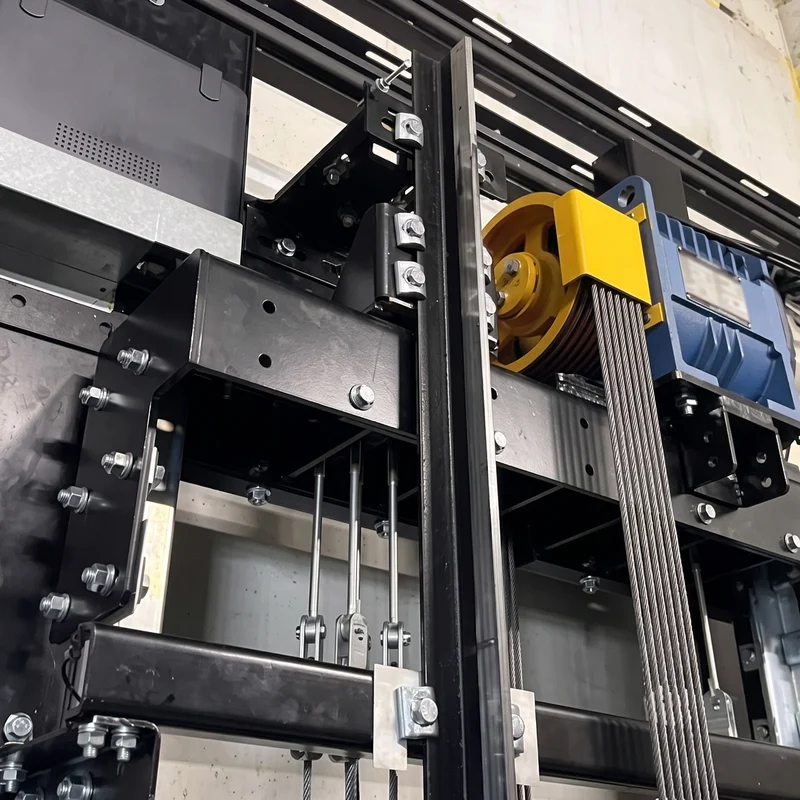
Choosing between a machine-room-less lift and a lift with machine room mostly depends on the building: available space, an existing room, height and use. Here are the criteria that matter.
Read the guide →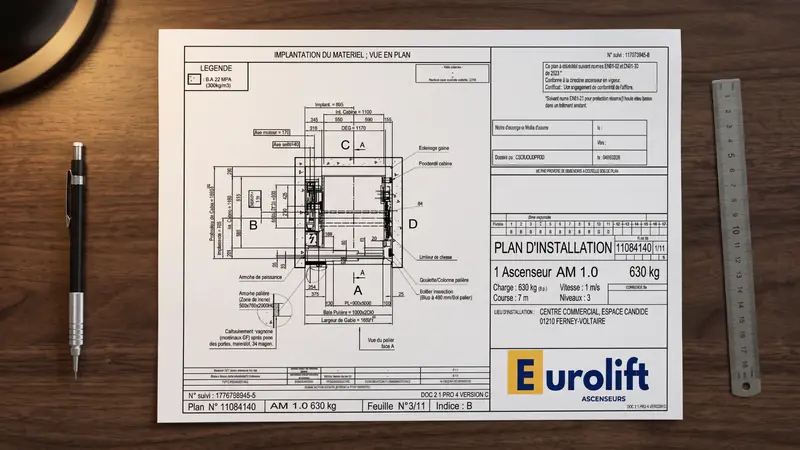
An accurate quote starts with good measurements. Here is what to measure on site, and the minimum pit and headroom values for each of our ranges.
Read the guide →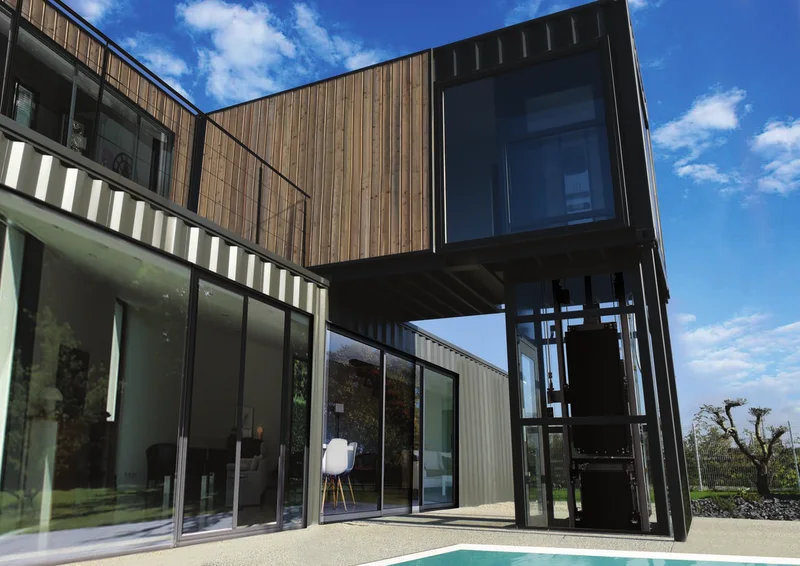
A private lift can now be installed without major works, in new and existing houses. Footprint, power supply, regulations: here are the points to check, with the example of the SweetLIFT.
Read the guide →
Buying a lift in Europe for a site abroad means organising the quote, manufacturing, documents and transport well. Here is how we work.
Read the guide →Send us your drawings: we study your project and send you a detailed offer.