

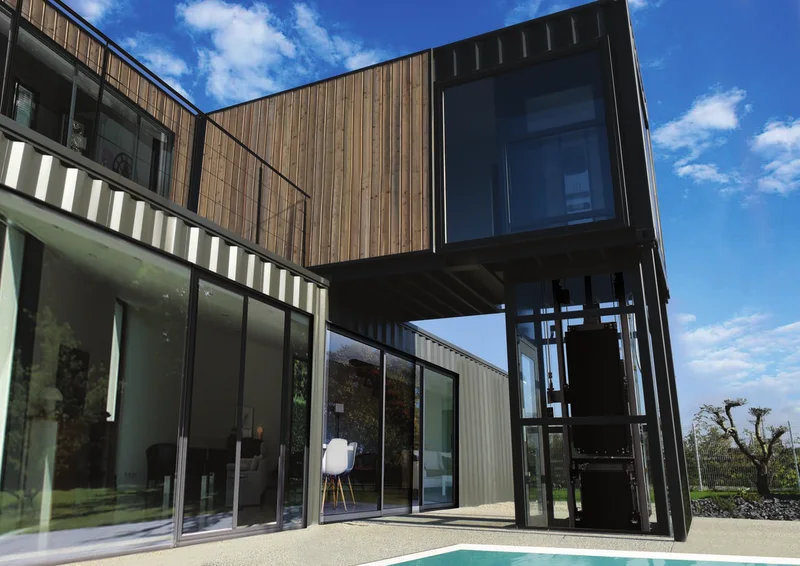
Pit
100 mm minimum: a simple recess in the slab, no deep pit.
Low-speed private lifts such as the SweetLIFT fall under the Machinery Directive 2006/42/EC, not the Lifts Directive. In the European Union their speed is limited to 0.15 m/s; outside the European Union the SweetLIFT can run at 0.40 m/s.
100 mm minimum: a simple recess in the slab, no deep pit.
2,500 mm minimum ceiling height.
1.5 to 15 m, up to several floors.
225 to 400 kg, 3 to 6 people, wheelchair accessible.
A self-supporting structure, inside or outside the house, in the colour of your choice, glazed or solid.
A concrete or masonry shaft built by the contractor, ideal in a new house.
A home lift designed in France by Sodimas for houses and villas: it fits without major works, with a 10 cm pit, and can be fully customised.
Learn more →A machine-room-less lift designed for buildings short on space: pit reduced to 300 mm and top floor at 2,500 mm, on a single load-bearing wall.
Learn more →Two cars made in France by Sodimas and delivered with your lift: Skincolor, with wood or plain skinplate panels, and the brushed stainless HYBRID car.
Learn more →It depends on local planning rules: an indoor installation usually needs none, an outdoor structure may require a declaration. Check with your local authority.
Yes: the 100 mm pit and self-supporting structure avoid major works. An opening in the floors is still needed to pass between storeys.
Lower speed and different rules: a private lift follows the Machinery Directive, a building lift the Lifts Directive and EN 81-20 and EN 81-50.
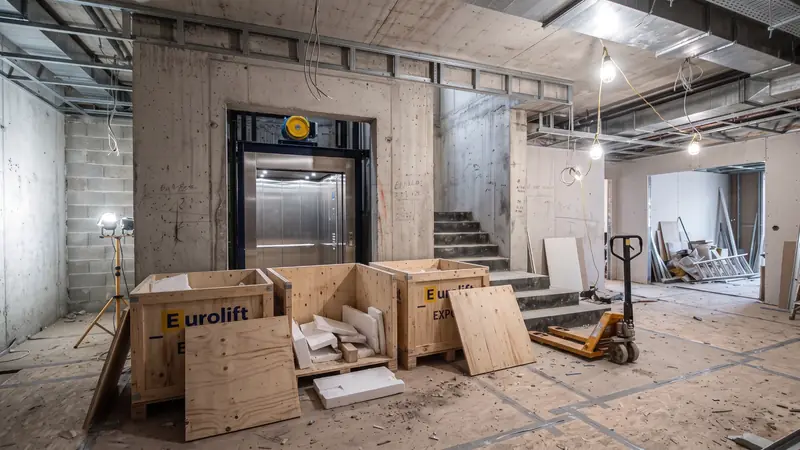
Since 2017, every new lift installed in Europe must comply with EN 81-20 (construction and installation) and EN 81-50 (design rules, calculations and tests of components). Here are the main requirements and how our lifts meet them.
Read the guide →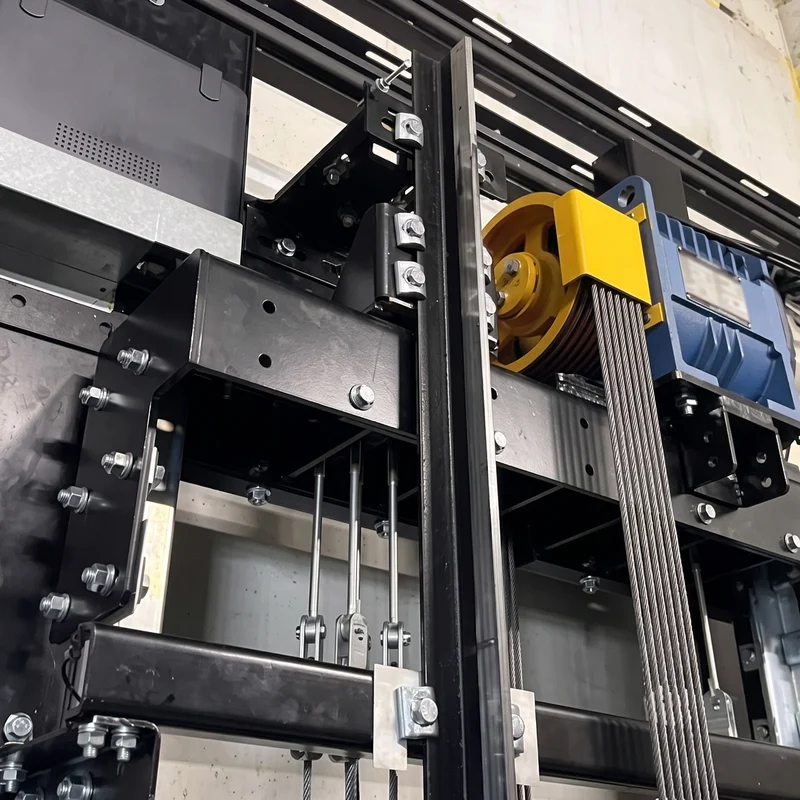
Choosing between a machine-room-less lift and a lift with machine room mostly depends on the building: available space, an existing room, height and use. Here are the criteria that matter.
Read the guide →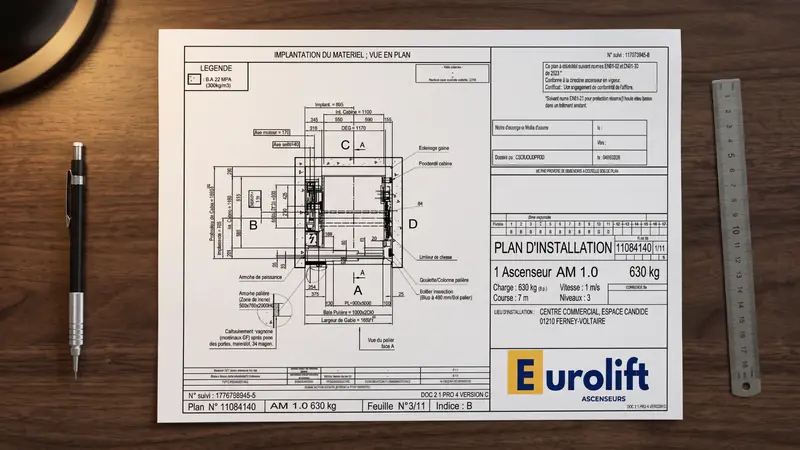
An accurate quote starts with good measurements. Here is what to measure on site, and the minimum pit and headroom values for each of our ranges.
Read the guide →
Buying a lift in Europe for a site abroad means organising the quote, manufacturing, documents and transport well. Here is how we work.
Read the guide →Send us your drawings: we study your project and send you a detailed offer.